
Why Is My Child So Clumsy?
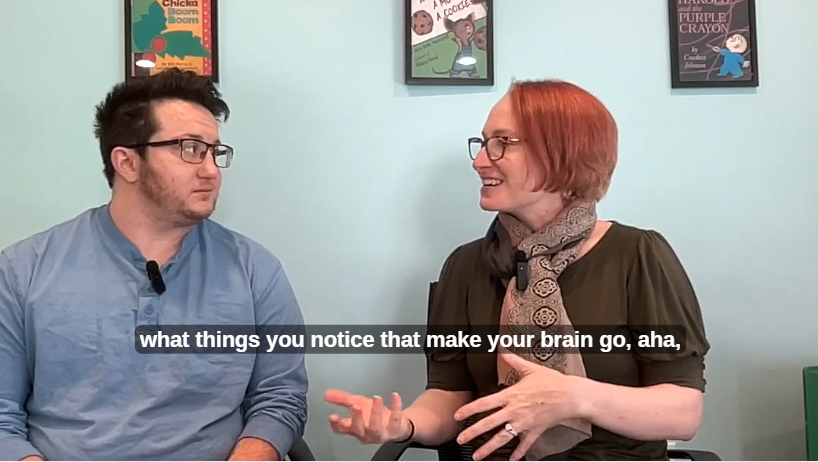
Hey, Miss Becca - Episode 3: “Why Is My Child So Clumsy?” (aka, “Why Does My Child Keep Getting Hurt?”)
“Hey, Miss Becca!”
From: Mom of 7-year old who keeps getting hurt
I have a question: “My daughter keeps getting hurt. She seems to forget where her body is and runs into things so frequently. Even when she is in a great mood and playing nicely, she might accidentally fall out of a chair or hit her head on a wall. She is starting to notice that this happens to her more often than her peers. What could be going on? How can I help her?”
Consultant: Mr. Ori, our motor mentor
Miss Becca says:
A parent recently approached me about her 7-year-old daughter who is becoming increasingly distressed by how often she accidentally injures herself. Her daughter has ADHD, struggles with spatial awareness, and seems to move through the world a little out of sync with her surroundings. What’s especially confusing is that she thrives in high-intensity athletic activities like skiing, yet something as simple as sitting in a chair or walking down a hallway can result in falls, bumps, and bruises.
Does this sound like your kid? If this sounds familiar, there’s a good chance what you’re seeing is related to sensory processing differences, specifically a “low registration” sensory profile.
What Does “Low Registration” Mean?
Sensory processing is the nervous system’s ability to (1) notice, (2) interpret, and (3) respond to information from both the body and the environment — movement, touch, pressure, lights, sounds, temperature, and internal body signals.
A low registration profile means the nervous system has a higher than average neurological threshold. The person needs a high intensity of input in order to register that something is happening at all. The signals are coming in — but they’re too quiet to catch the brain’s attention. The nervous system is not registering subtle signals.
This profile is quite common in neurodivergent children and is frequently seen alongside ADHD, and in people with low muscle tone, and/or joint hypermobility. Research consistently shows significant overlap between ADHD and sensory processing differences, particularly in proprioception (body awareness) and vestibular processing (movement and balance). In a person with lower than average muscle tone (defined as the rigidity of muscles when they are at rest) the sensory receptors (proprioceptors) that are located within the muscles and the joints are harder to stimulate since there is less tension on them. It is like strumming a string that is tight. It will make a nice noise. When you strum a loose rubber band, it will not make a noise. When a person consistently receives confusing or inadequate information about their body and their environment, it can lead to significant challenges with motor coordination (often labeled as “dyspraxia” - or “developmental coordination disorder”).
Why Low Registration Leads to Accidents
Trying to coordinate your movements with low sensory registration is a bit like trying to eat after getting Novocain at the dentist.
You know you have a mouth, and you know the food is there, but without adequate feeling…
Your lips don’t close quite right
You have no idea where your tongue is
Saliva escapes without warning
You accidentally bite yourself
Now imagine that sensation (rather — lack of sensation) happening throughout your entire body! When your child isn’t receiving enough sensory information from either her internal body cues or her external environment, she may not know:
Where her body is in space
How much force she’s using
Whether she’s upright, leaning, or slipping
How fast she is moving
Without high intensity sensory input, her body doesn’t have enough information to respond to. So, when she is sitting still, her body may slowly lose posture until she slumps on the table or falls out of the chair. When she handles soft or smooth materials, she may unintentionally drop them or crush them because she can’t feel how much pressure she’s applying.
Why High-Intensity Activities Help So Much
Now let’s look at skiing. Skiing is a high sensory intensity sport which involves rich sensory inputs including:
Cold temperatures
Fast movements
Wind blowing on your face
Strong muscle contractions
With all of this input, a child’s nervous system has enough information to coordinate a plan. Her brain can register where her body is, how fast it’s moving, and how to adapt her force and position safely.
In OT, we will often use “heavy work” (activities that require strong muscle contractions and joint compressions) as a therapeutic warm up since it increases the brain’s awareness of the body and facilitates motor planning and safety for the upcoming activities. We also look to add sensory feedback to motor activities in order to make coordination easier. This can include playing catch with a weighted and/or textured ball instead of a standard one. Or it could look like using a vibrating seat cushion or using sandpaper as a work surface for pencil and paper tasks.
This same pattern often shows up internally for people with low registration sensory profiles (those with high neurological thresholds). Subtle signals like mild hunger, early fatigue, or a growing need to use the bathroom, may be completely missed. Sometimes, the signal only registers when it becomes intense and urgent:
“I have to go RIGHT NOW — it’s an emergency!”
“But you said you didn’t have to go 2 minutes ago.”
Sometimes, it is simply that it is inconvenient to stop what you are doing to go use the bathroom. But for our low registration friends, it can come as quite a surprise.
Supporting Body Awareness During Low-Intensity Activities
Because it’s not realistic (or safe) to keep a child in high-intensity environments all day, we need to look for ways to support body awareness and safety in other ways. There are some things we can do to help turn up the volume for some quieter and gentler activities.
Compression (compression shirts, leggings)
Vibration (vibrating seat cushions)
Weight (weighted pencils, backpacks, lap pads)
Deep pressure and heavy work (classroom jobs, chair push ups, etc.)
Oral input (chewing, crunchy snacks, cold drinks)
These inputs help the nervous system stay “online” even when the environment itself offers too little input.
Practical Supports for School and Home
A vibrating seat cushion for chair or floor work
Weighted or thicker pencils to improve writing coordination
Access to resistive fidgets (therapy putty, firm stress balls)
Chewing gum if safe and appropriate for your child
Ice water (with lemon) in a bite and suck straw cup like Camelbak
Scheduled deep pressure or heavy work breaks — even 5 minutes per hour can help
Yoga poses
Wall push-ups
Weighted ball toss
Trampoline jumping
Hug sleep sack or compression sheets to support better quality sleep
Make Everyday Tasks More “Information-Dense”
When choosing materials for fine motor tasks or self-care routines, ask yourself:
How can I make this easier for her nervous system to notice? (How do I turn up the volume?)
Some ideas:
Electric toothbrush instead of manual
Scented markers instead of unscented
Heavier cups, utensils, or tools
Textured or weighted items whenever possible
The more sensory information the task provides, the more successful she’s likely to be.
Using Vision to Compensate for Low Body Awareness
When proprioception cannot be relied on to give our brain accurate information about our body in space, we can use our vision to compensate. And many people do. But an important piece of the ADHD puzzle is visual attention. Many children with ADHD and sensory processing differences struggle to automatically use their vision to guide movement, but this can be taught and practiced.
Helpful strategies include:
Prompting “Look first, then move”
Asking the child to describe what they see in their environment before they engage in a physical activity
Using a mirror for added feedback during motor activities
Using visual markers for where to put hands and feet, or where to stand or aim
Vision can be a powerful support for proprioceptive challenges, but often needs to be actively practiced in order to be an effective accommodation.
When To Seek Professional Help
It’s incredibly emotionally and physically hard for a child to keep getting hurt by accident, and just as hard for parents to watch it happen. With the right supports, this isn’t something your child has to simply “grow out of” or endure.
By understanding your child’s nervous system and giving it the input it needs, we can reduce injuries, build confidence, and help your child move through the world feeling safer in their own body. If you would like to know more about the strategies described, or would like to connect with an occupational therapist that is well versed in this particular presentation, please do not hesitate to reach out to contact@thelarkcenter.com.